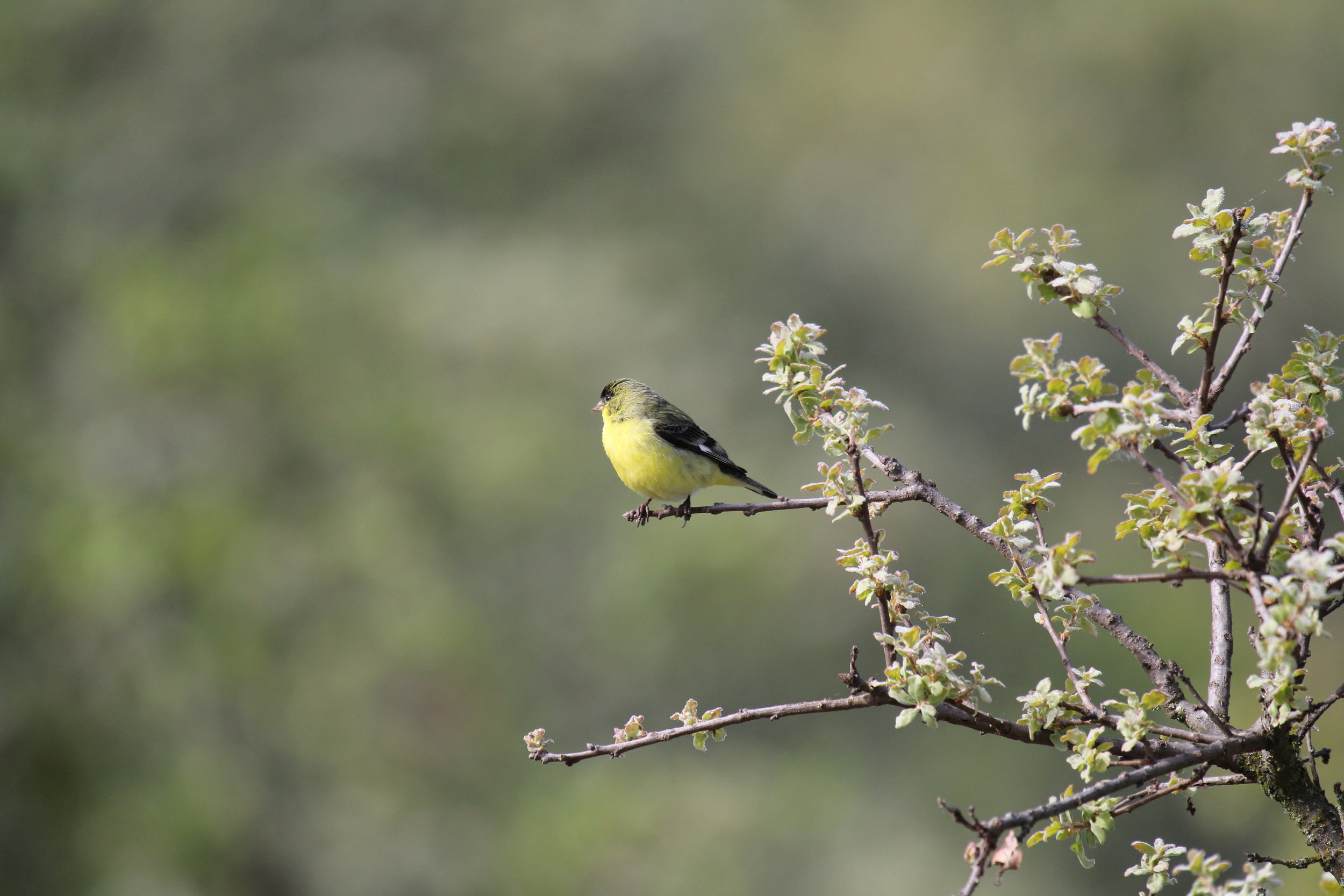
Most of our work takes place in Los Angeles, where we ask how the city's plants, landscapes, and history shape the birds and insects that live here. Our projects range from experiments with oaks on campus, to residential yards, to museum records from more than a century ago that show what the region's bird communities looked like before urbanization.
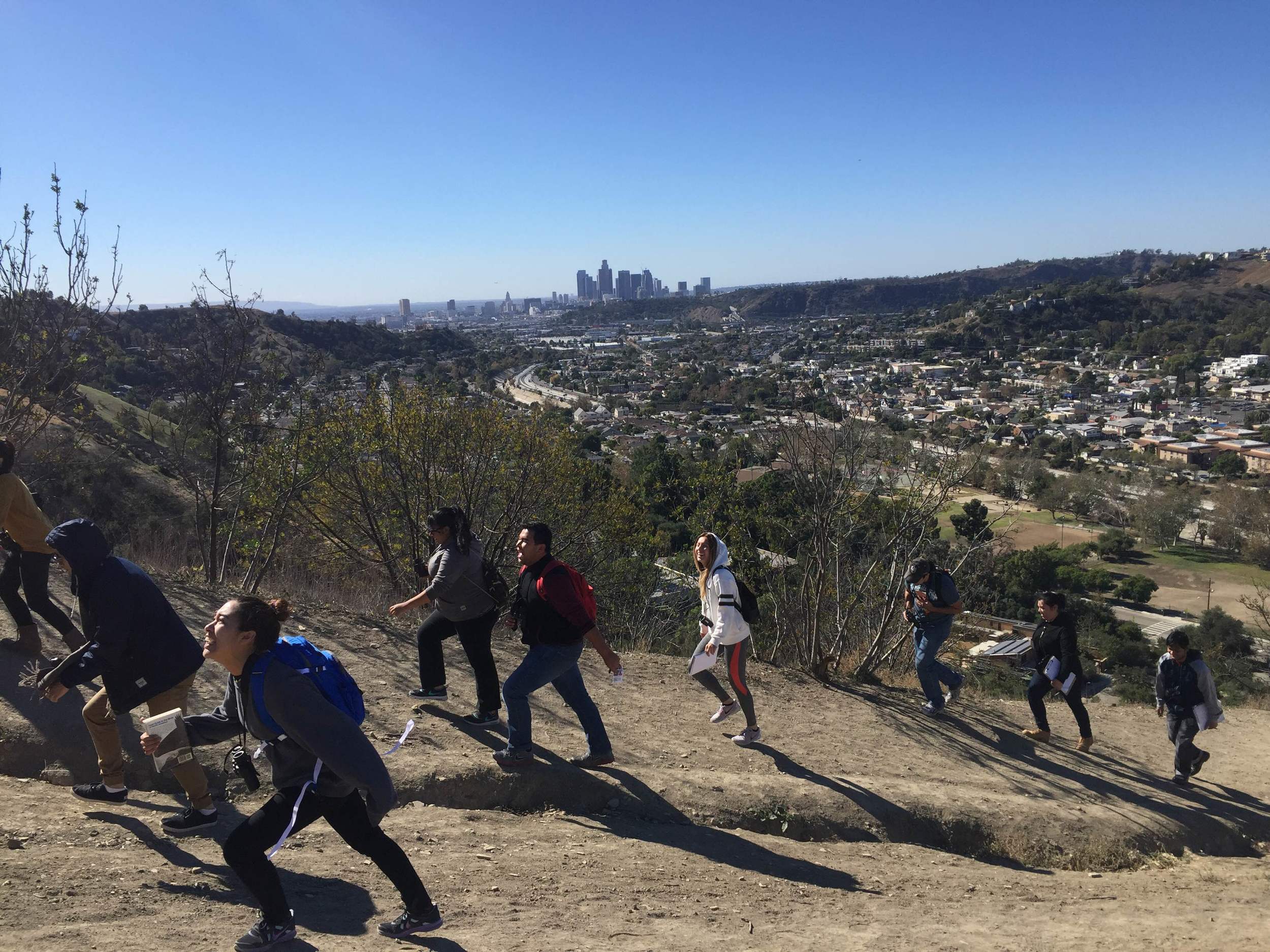
Students, busy surveying wildlife at Ernest E. Debs Regional Park overlooing downtown LA.
1. Native and non-native oaks on campus
In a planted experiment on the Cal State LA campus, we compare five oak species: two California natives (coast live oak and Engelmann oak) and three oaks that are not native to the region (cork oak, holly oak, and southern live oak). Earlier theses in the lab used these trees to study herbivory and the value of birds to native trees. The current project asks which arthropods actually use each oak, pairing leaf-surface environmental DNA (eDNA) with direct sampling to detect insects that are easy to miss in short field searches.
Lab members: Maija Talvitie
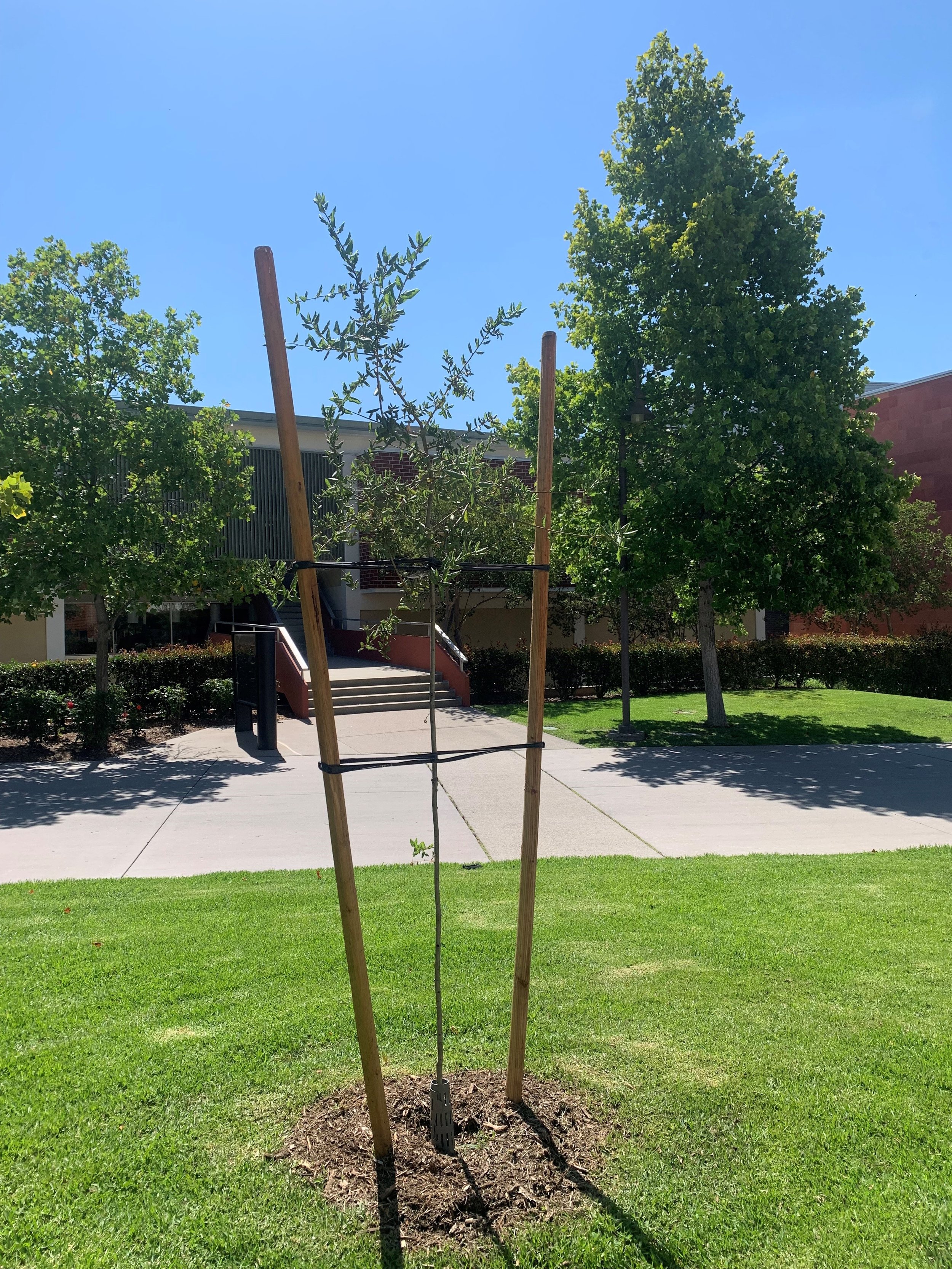
We have an experiment on our campus with over 200 planted oaks of five species - two native to Southern California, and three that are nonnative in their geographic origin. We are asking questions as to the bottom-up effects of native and nonnative trees on structuring herbivores and top-down controls by foraging birds.
2. Native plants in residential yards
Our earlier work showed that front yards landscaped with native plants support more bird foraging than conventional yards (Smallwood & Wood 2023) and documented which plants pollinators visit in these yards (Reyes, Smallwood & Wood 2026). The next round of projects asks why, and how close these yards come to natural habitat. Students are testing how plant origin and vegetation structure together drive bird and insect foraging, building plant–pollinator networks from the pollen that insects carry, and asking whether yards designed around a local plant community, such as coastal sage scrub, support wildlife more like natural sites than yards with a general mix of native plants.
Lab members: Kristofer Gonzalez, Malena Lacque

A native-landscape yard in Greater Los Angeles. We focus on how landscape choices influence habitat use by birds and insects in residential yards - espeically those landscaped with ative plants - throughout Los Angeles.
3. Historical ecology of Los Angeles birds
Before Los Angeles became a city of millions, egg collectors documented where birds nested across the region. Using museum egg records from 1880–1939, along with reconstructions of the region's historical vegetation, we rebuild where species bred more than a century ago and compare that baseline with modern breeding bird atlas data. This work asks which species and habitats were lost or gained, how urbanization reshaped the habitat associations that once structured the region's bird communities, and how historical policies such as redlining left their mark on the birds of today's neighborhoods.
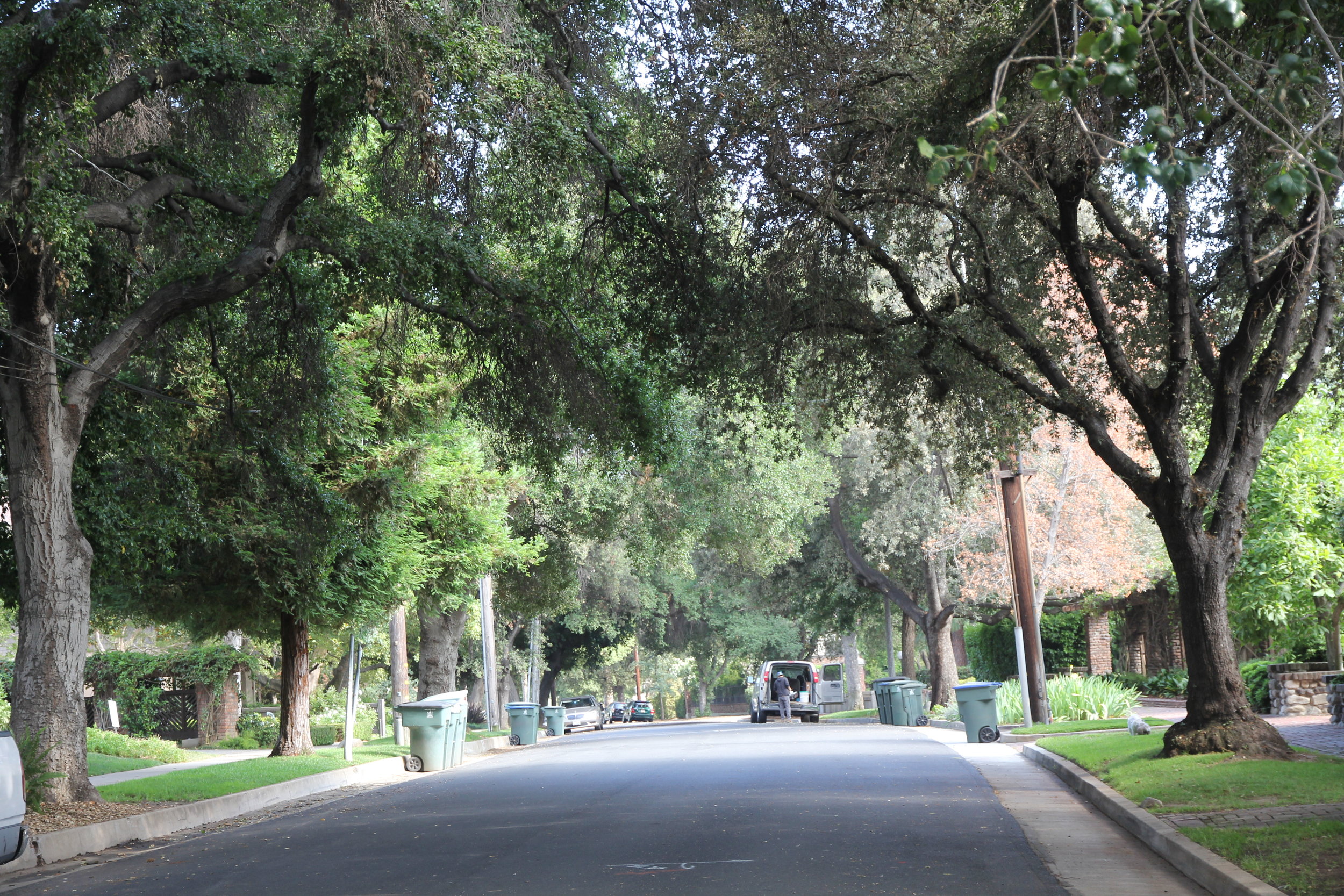
A street in Pasadena, planted with native and noonative oaks. We ask questins about how the development of the city altered conditions that affect present-day avifuanal communities.